Introduction
Kodinerds and go2rtc are both connected to digital video, but they serve fundamentally different purposes. Kodinerds is part of the Kodi-focused media-center ecosystem, designed around organizing and playing digital media. go2rtc is a lightweight real-time media streaming application designed to connect, restream, and convert video and audio streams between supported protocols.
Although both can appear in home-media and video-streaming environments, they operate at different levels of a media system. Kodinerds focuses on the user-facing media experience, while go2rtc focuses primarily on handling and delivering media streams.
This comparison examines Kodinerds and go2rtc objectively, covering their features, performance, compatibility, requirements, use cases, advantages, and limitations without declaring either option superior.
What Is Kodinerds?
Kodinerds is a community-oriented ecosystem centered around Kodi and related media-center resources. It is associated with Kodi-based configurations, packages, discussions, and resources for users operating Kodi on compatible devices.
Kodi provides an interactive environment for organizing and playing digital media. Depending on the configuration, it can work with local files, network media, and supported online sources.
Key Features of Kodinerds
- Kodi-based media-center interface
- Video and music library management
- Local and network media playback
- Customizable interface
- Television and remote-control-friendly design
- Support for different media sources
- Community-developed Kodi resources
- Broad home-entertainment functionality
What Is go2rtc?
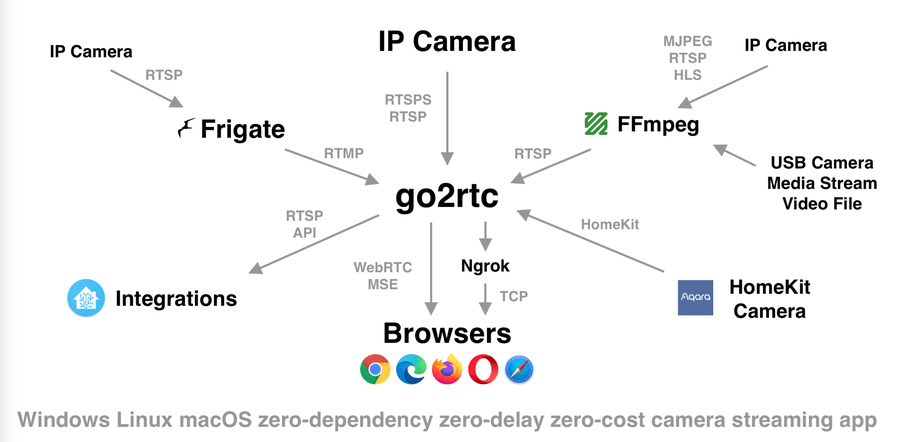
go2rtc is a real-time media streaming application designed to connect and restream video and audio sources. It supports multiple streaming protocols and can act as an intermediary between cameras, media applications, and other compatible clients.
It is particularly relevant to systems involving IP cameras, surveillance streams, home automation, and real-time video distribution. Rather than functioning as a traditional media-center application, go2rtc operates primarily as a media-streaming layer.
Key Features of go2rtc
- Real-time video and audio streaming
- Support for multiple streaming protocols
- Stream restreaming
- Camera-stream integration
- Low-latency streaming workflows
- Audio and video handling
- Integration with home-automation and surveillance environments
- Lightweight server-oriented design
Kodinerds vs go2rtc Comparison
| Feature | Kodinerds | go2rtc |
| Primary purpose | Kodi-based media center | Real-time media streaming |
| Main focus | Media organization and playback | Stream connection and restreaming |
| Interface | Full media-center interface | Server-oriented interface |
| Local media playback | Core functionality | Not its primary purpose |
| Live camera streams | Possible through suitable configurations | Strong focus |
| Stream restreaming | Not its primary role | Core functionality |
| Media library | Strong | Not a primary feature |
| Low-latency streaming | Depends on source and configuration | Important use case |
| Protocol handling | Depends on Kodi capabilities | Supports multiple media protocols |
| Typical environment | Home theater and media devices | Cameras, servers, automation systems |
| Resource usage | Varies by media workload | Designed for relatively lightweight streaming |
| Main user focus | Media consumption | Media transport and stream management |
Features and Functionality
The biggest difference between Kodinerds and go2rtc is their position within a media workflow.
Kodinerds belongs to the media-center layer. It provides an interface for users to browse, organize, and play digital content.
go2rtc belongs more closely to the media-streaming layer. It receives streams from compatible sources and can make them available to other clients through supported protocols.
This means the two technologies can potentially work together in a larger setup. A streaming service such as go2rtc can handle the transport of a video stream, while a media-center application can provide the interface used to view compatible content.
Performance Considerations
Performance depends on hardware, stream quality, protocols, network conditions, and configuration.
Kodinerds Performance
Kodinerds performance can be influenced by:
- CPU performance
- GPU capabilities
- Available RAM
- Storage speed
- Media-library size
- Video resolution
- Codec support
- Hardware acceleration
- Number of installed extensions
High-resolution content and demanding codecs can increase hardware requirements.
go2rtc Performance
go2rtc performance is affected by:
- Number of simultaneous streams
- Video resolution and bitrate
- CPU resources
- Available RAM
- Network bandwidth
- Protocol conversion requirements
- Hardware acceleration
- Source-device performance
- Transcoding or remuxing workload
Stream handling can be relatively lightweight when compatible streams can be passed through without intensive processing. Additional processing can increase resource requirements.
Compatibility
Kodinerds Compatibility
Kodinerds compatibility depends on the Kodi version, operating system, hardware platform, and installed components.
Kodi-based environments can operate on multiple supported platforms, although features and performance may vary between devices. Extensions and external components can introduce additional compatibility requirements.
go2rtc Compatibility
go2rtc is designed for server and embedded environments and can be used with supported operating systems and hardware platforms.
Its practical compatibility also depends on the source and destination protocols. Cameras, streaming applications, and clients must support compatible formats or protocols for the intended workflow.
The exact capabilities can vary depending on the version and configuration.
Requirements
Kodinerds Requirements
A typical Kodinerds setup may require:
- Compatible Kodi-supported hardware
- Supported operating system
- Appropriate Kodi installation
- Adequate storage for local media
- Network connectivity for online or network sources
- Sufficient CPU and GPU resources for desired media formats
Requirements vary according to the device and media workload.
go2rtc Requirements
A typical go2rtc setup may require:
- Compatible operating system or server environment
- Appropriate go2rtc installation
- Network connectivity
- Compatible video or audio sources
- Supported streaming protocols
- Adequate CPU and RAM for the number of streams
- Sufficient network bandwidth
Hardware requirements depend heavily on the number and complexity of streams being handled.
Common Use Cases
Kodinerds Use Cases
Kodinerds can be relevant for:
- Home theater systems
- Television-based media centers
- Local movie collections
- Music libraries
- Network media playback
- IPTV through compatible configurations
- Centralized media organization
- Customized entertainment systems
Its main role is to provide a unified interface for managing and consuming digital media.
go2rtc Use Cases
go2rtc can be useful for:
- IP-camera streaming
- Security-camera integrations
- Home-automation systems
- Restreaming camera feeds
- Connecting different streaming protocols
- Low-latency video workflows
- Making camera streams available to compatible clients
- Media-streaming infrastructure
Its primary role is to handle real-time streams rather than manage a conventional media library.
Advantages of Kodinerds
- Broad media-center functionality
- Strong media-library organization
- Supports local and network media
- Highly customizable
- Suitable for television-oriented environments
- Supports multiple media types
- Useful for centralized home entertainment
Limitations of Kodinerds
- Hardware requirements vary by workload
- Advanced configurations can increase setup complexity
- Some live-streaming functionality requires additional configuration
- Extensions can introduce compatibility considerations
- It is not designed primarily as a real-time stream relay
Advantages of go2rtc
- Designed specifically for real-time media streaming
- Supports multiple streaming protocols
- Useful for camera and surveillance workflows
- Can restream compatible sources
- Suitable for low-latency applications
- Can integrate with broader home-automation systems
- Designed to operate as a lightweight streaming component
Limitations of go2rtc
- Not a complete media-center application
- Does not provide the same media-library experience as Kodi
- Configuration can require knowledge of streaming protocols
- Performance varies according to stream count and processing requirements
- Compatibility depends on source and client protocols
- Advanced media processing can increase system-resource requirements
Kodinerds vs go2rtc for Different Environments
The two options are best understood according to their different roles.
Kodinerds is centered on media organization and playback, making it relevant for users who want a complete interface for managing and consuming digital content.
go2rtc is centered on real-time media transport and stream management, making it relevant for camera systems, home automation, and applications that need to connect or restream video and audio sources.
They can therefore serve complementary functions within a larger system. A stream-management component can provide a compatible feed, while a media-center application can provide a user-facing environment for viewing supported content.
Key Differences at a Glance
- Primary role: Kodinerds focuses on media-center functionality, while go2rtc focuses on real-time media streaming.
- Interface: Kodinerds provides a user-facing media interface; go2rtc operates primarily as a streaming service.
- Media library: Kodinerds emphasizes media organization, while go2rtc focuses on handling streams.
- Camera support: go2rtc is particularly relevant to camera and surveillance workflows, while camera playback in Kodi depends on the selected configuration.
- Performance: Kodi performance depends heavily on playback hardware, while go2rtc performance depends strongly on stream count, bitrate, protocols, and processing requirements.
- Compatibility: Kodinerds depends on Kodi-supported platforms and media formats, while go2rtc depends heavily on source and destination protocol compatibility.
- Use cases: Kodinerds suits home-media consumption, whereas go2rtc suits real-time video-stream infrastructure and integrations.
Conclusion
Kodinerds and go2rtc occupy different positions in the digital-media ecosystem. Kodinerds is associated with a Kodi-based media-center environment designed to organize, browse, and play digital content. go2rtc is a real-time media-streaming component designed to connect, restream, and deliver compatible video and audio streams.
The central distinction is their intended role: Kodinerds emphasizes media-center organization and playback, while go2rtc emphasizes real-time stream handling and distribution. Their features, performance, compatibility, requirements, use cases, and limitations should therefore be evaluated according to whether the primary requirement is user-facing media consumption or underlying stream management.